


Pionierarbeit in Sachen elektrische Leercontainerstapler
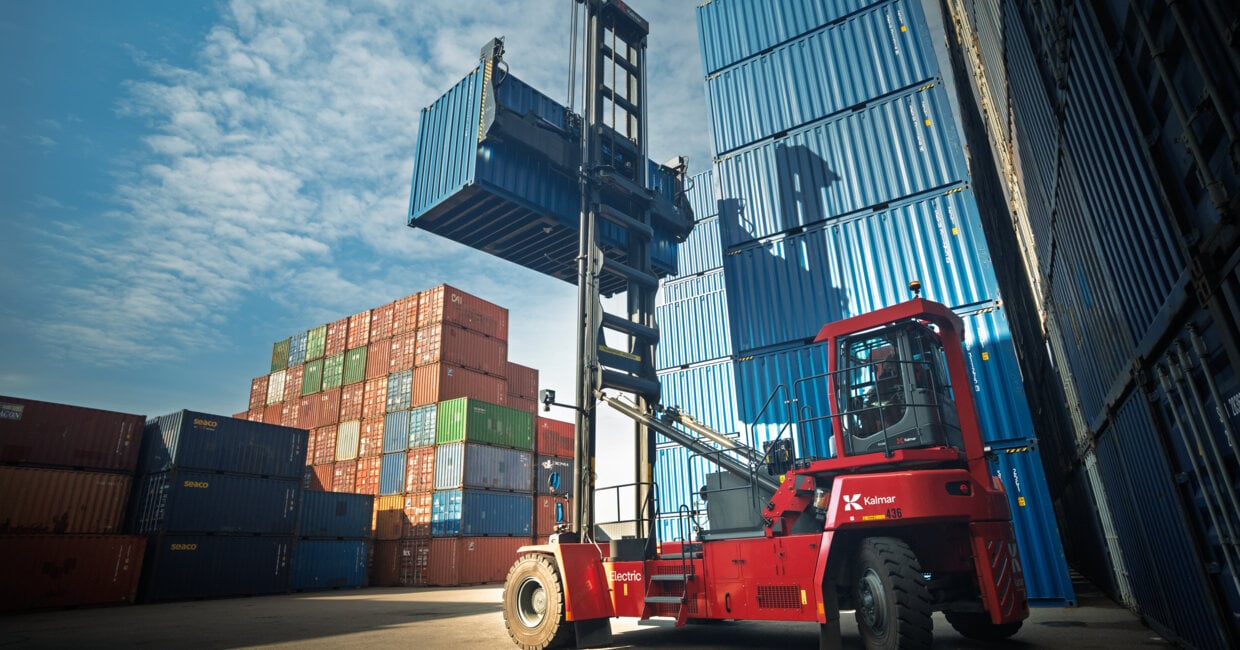
Kalmars erster elektrischer Leercontainerstapler bewährt sich im Probebetrieb im Hamburger Hafen.
Elektro statt Diesel, Batterie statt Tank: Seit über einem Jahr setzt die HCS Hamburg Container Service Kalmars ersten Elektro-Leercontainerstapler (ECG) ein. Das Modell ECG 90-110 mit 9 bis 11 Tonnen Hubkraft (vor Ort ist ein 10-Tonnen-Gerät im Einsatz) wird im Zwei-Schicht-Betrieb getestet. Bewertet wurden unter anderem Fahrverhalten, Ladehandling und Performance.
„No shipping, no shopping“ – so bringt es Dr. Roland Karnbach auf den Punkt, warum ihr Metier so wichtig ist. HCS Hamburg Container Service „bewegt“ sich zwischen Import und Export – auch ganz wörtlich. Im Containerdepot am Hamburger Hafen kommen täglich zwischen 300 und 500 Leercontainer an, werden inspiziert, gereinigt, repariert, gelagert und wieder abgeholt. „Übers Jahr gesehen ,drehen' bei uns 100.000 Container durchs Depot“, so Dr. Karnbach, der HCS seit mehr als 30 Jahren leitet. Sein Sohn Finn Karnbach ergänzt: „Auf unserer 125.000 Quadratmeter großen Lagerfläche wickeln wir rund 3.000 ‚Moves‚ am Tag ab.“ Finn und sein Bruder Justin sind seit letztem Jahr ebenfalls Geschäftsführer und leiten das 1978 vom Großvater gegründete Containerdepot nun in dritter Generation weiter.
Zu den Kunden von HCS gehören neben großen Reedereien wie COSCO, Grimaldi Lines, Hapag-Lloyd, Maersk, ONE und OOCL, sondern auch Händler und Leasinggesellschaften, die hier ihre Leercontainer aufbereiten lassen, bevor sie wieder für den Ladungsumschlag eingesetzt werden. Das Depot von HCS hat eine Lagerkapazität von rund 14.500 TEU und beschäftigt 75 Mitarbeiter, davon 35 Leercontainerstaplerfahrer. Ihnen obliegt es, die leeren Container nach Kunde und Qualität zu sortieren und bei Abruf zu den wartenden Trucks am Gate zu transportieren. Dafür stehen ihnen eine Flotte aus elf Leercontainerstapler zur Verfügung – acht davon stammen von Kalmar.
Im Dezember 2024 gesellte sich ein ‚elektrischer Leercontainerstapler‘ zu den dieselbetriebenen Maschinen. Das Modell ist fast exakt baugleich zu den Verbrenner-Maschinen. Die Vorgabe zu Beginn der Testphase lautete: Das Elektro-Modell muß in seiner Bewährungsphase zeigen, dass es das Gleich "draufhat" wie seine Diesel-Kollegen.
Bei der Performance liegen Diesel- und Elektro-Leercontainerstapler gleichauf
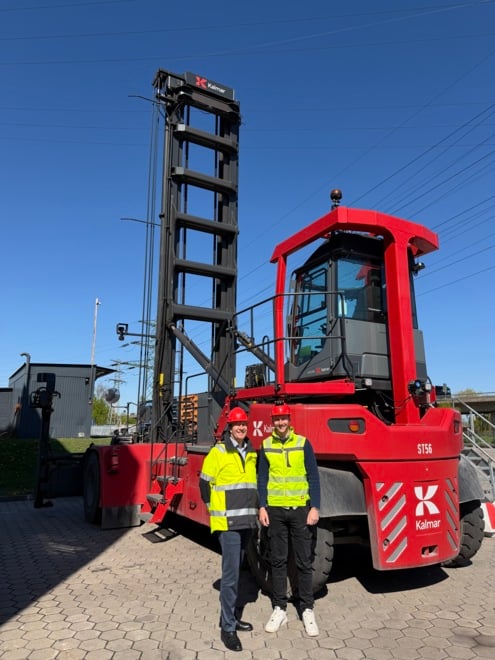
Auf Seiten von Kalmar wird HCS von Verkaufsleiter Bernd Pagel und Jens Sczepan, Serviceleiter für Hamburg und Schleswig-Holstein, betreut. Sie hatten dem Hamburger Unternehmen Kalmars allererstes Elektromodell – den ECG 90-110 – als Mietgerät für einen 12-monatigen Test überlassen, der jetzt in die Verlängerung geht.
Finn Karnbach betont, dass es für sie wichtig war, dass die Fahrer bei der Bedienung keinen Unterschied merken: „Sie sollen zwischen beiden Geräten wechseln können, ohne darüber nachzudenken.“ Und tatsächlich haben sie festgestellt, dass die Tages-Performance vom Fahrer abhängt und davon, welche Art von Container er umschlägt und nicht von der Maschine. „Egal, wo wir den Elektro-Leercontainerstapler einsetzen, er macht sich überall gut. Er ist nicht schneller oder effizienter, aber auch nicht weniger schnell oder weniger effizient“, sagt Dr. Karnbach mit typischem Hamburger Understatement. Auf die Frage, ob der Elektro-Leercontainerstapler leistungsmäßig mit dem Diesel-Leercontainerstapler mithalten kann, antwortet der Geschäftsführer: „Ja, definitiv!“
Ähnliches Fahrverhalten, wesentlich leiser
Wie man es auch vom E-Auto kennt, bremsen auch die großen E-Stapler sehr sanft und gleiten leise los. „Wenn es nicht so brummt und der Containerstaplerfahrer die ‚Kraft der Maschine‘ weniger bewusst spürt, ist das am Anfang ungewohnt“, berichtet Bernd Pagel. Tatsächlich ungewohnt für die Fahrer war es, dass der Elektro-Leercontainerstapler keinen Kriechgang kennt. „Wenn man beim Elektro-Leercontainerstapler die Bremse löst, fährt er nicht sofort los, wie es beim Diesel der Fall ist. Das wurde dann aber nach Rücksprache mit Kalmar geändert, so dass Bedienung und Fahrverhalten nun gleich sind“, erzählt Dr. Karnbach.
Eine große Eingewöhnungsphase war laut Markus Schlüter nicht nötig. Der 38-Jährige ist seit zehn Jahren bei HCS im Depot als Containerstaplerfahrer unterwegs und ist sofort mit dem Gerät klargekommen. Besonders gut gefällt ihm, dass der neue Elektro-Leercontainerstapler mit Luftreifen ausgestattet ist und nicht mit Vollgummireifen.
„Mit denen fährt es sich für uns Fahrer viel angenehmer, weil die besser abfedern, wenn man über eine Schwelle oder ein Schlagloch fährt“, lobt Schlüter. Ansonsten sei der Unterschied zu den Diesel-Leercontainerstaplern nicht allzu groß – ausgenommen natürlich das Wegfallen der Geräuschkulisse – „das ist ein Unterschied wie Tag und Nacht,“ so Schlüter.
Auch Dr. Karnbach sieht darin einen entscheidenden Vorteil des Elektro-Leercontainerstaplers: „Das liegt auch daran, dass Pumpen und andere Komponenten ebenfalls leise sind. Das ist Kalmar gut gelungen. Ich habe schon andere Elektromodelle erlebt, die auch mal nervige, höhe Töne von sich gaben.“ Sein Zwischenfazit nach der Testphase: „Was Ansprechverhalten, Fahrverahlten und Kraftumsetzung angeht, haben wir von den Fahrern positive Rückmeldungen erhalten. Alles funktioniert sauber, und das ist für uns das große Plus. Und deshalb haben wir gesagt: ‚Ja, diese Maschine betreiben wir weiter!‘“
Langzeittest: In puncto Wirschaftlichkeit soll der Elektro-Leercontainerstapler punkten
Nach der einjährigen Testphase haben sich Kalmar und HCS darauf verständigt, dass der Elektro-Leercontainerstapler für weitere 48 Monate im Einsatz bleibt. „Dann hat unser Gerät am Ende einen Langzeittest über 60 Monate absolviert, und wir können die Lebenszykluskosten berechnen“, sagt Bernd Pagel. Sein Kollege Jens Sczepan ergänzt: „Das ist dann die erste Maschine von uns am Markt, wo wir das konkret berechen und feststellen können, wie konkurrenzfähig die Maschine ist. Wir sehen, wie stabil die Komponenten laufe und können zum Beispiel auch den Verschleiß im Vergleich zum Dieselstapler bewerten.“ Der Serviceleiter erwartet, dass sich das Elektromodell als kosteneffizienter und deutlich wartungsärmer herausstellt.
Bernd Pagel konkretisiert: „Wir wissen, dass ein Diesel-Leercontainerstapler in der Regel bei HCS nach ca. 15.000 Betriebsstunden getauscht wird.“ Diee Zahl dürfte der Elektro-Leercontainerstapler im vierten Jahr seines Einsatzes erreichen, da die Karnbach von etwa 3.500 Betriebsstunden imJahr ausgehen. Beide Firmen habe das gleiche Ziel vor Augen, mämlich dass der Elektro-Leercontainerstapler mindestens die gleiche Anzahl an Betriebsstunden leistet. Um im gesamten Lebenszyklus weniger Kosten zu verursachen als ein Diesel, sollte der in der Anschaffung noch merklich teurere Elektro-Leercontainerstaperl eine erheblich längere Laufzeit erreichen.
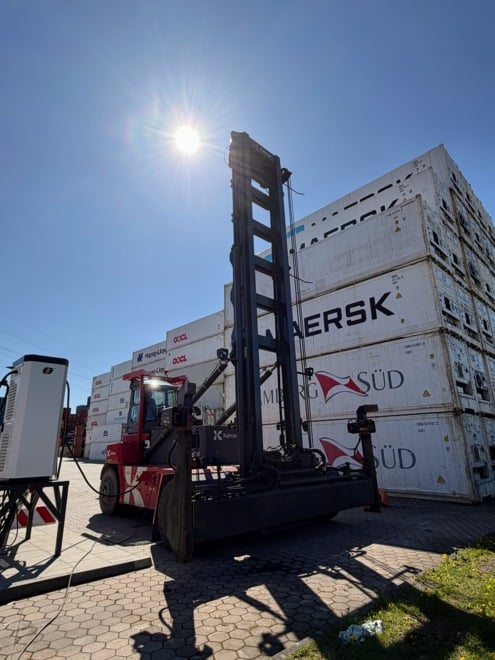
Die ersten Meilensteine sind erreicht: Der Elektro-Leercontainerstapler bewährt sich und das Aufladen funktioniert. Dass sich das Laden des Elektro-Leercontainerstaplers mittlerweile eingespielt hat, bestätigt auch Markus Schlüter. Der Leercontainerstapler wird über Nacht und in der Mittagspause aufgeladen. „Ich stecke den Stecker ein, halte den Chip davor, warte, bis der Leercontainerstapler sich verbindet, dann macht es ‚wrrrrrp‚ und die Säule wird blau und zeigt so an, dass er lädt“, beschreibt Schlüter ganz plastisch den Vorgang. Bernd Pagel ergänzt: „Das neue Modell verbraucht etwa 35 kW/h und hat dann eine Standzeit zwischen acht und neun Stunden.“ Auf lange Sicht reicht eine Ladesäule nicht aus. Gedanklich sind die Karnbachs daher schon bei der nächsten "Challenge", nämlich die Zahl der Ladesäulen zu erhöhen und damit einhergegend ein intelligentes Lademanagement aufzubauen.
Von 1 auf 11: Bis 2040 sind wir (vielleicht) ‚grün‘
Dr. Karnbach zweifelt nicht daran, dass im Depot von HCS einmal elf Elektro-Leercontainerstapler im Einsatz sein werden. Ob es allerdings bis 2040 gelingen wird, die gesamte Leecontainerstaplerflotte zu elektrifizieren, ist unklar. Zwar hat Hamburg per Volksentscheid beschlossen, bis 2040 klimaneutral zu sein, aber wie der konkrete Weg dorthin aussieht, ist offen. Allen Beteiligten an dem Einführungsprojekt ist klar, dass sie derzeit die ersten Pionierschritte gemeinsam beschreiten. Dr. Karnbach spricht Klartext, wenn er die Aufgabe, die vor ihnen liegt, beschreibt: „Eine Dieseltankstelle mit einem 10.000-Liter-Tank zu bauen, ist ‚Peanuts‘ dagegen. Eine Ladeinfrastruktur für elf Großgeräte plus vier Terminal-Zugmaschinen plus kleinere Stapler aufzubauen, bedeutet eine Investition von vielen Millionen Euro. Und diese Umstellung muss für uns wirtschaftlich machbar sein. Das ist die große Herausforderung.“ Eine Herausforderung, der sich die Karnbachs stellen, während sich viele andere Unternehmen in der Branche noch zurücklehnen und abwarten. Diese Haltung teilt Dr. Karnbach nicht. Aus einem einfachen Grund: „Ich mag den Planeten, auf dem wir leben, und anders als Herr Trump bin ich davon überzeugt, dass wir einen Klimawandel haben.“
„Kalmar will HCS in ihrer Pionierrolle unterstützen“, bekräftigt Bernd Pagel, „damit wir gemeinsam das Ziel ‚2040 klimaneutral zu sein‘ realisieren können.“ Bis dahin gibt es noch „viele kleine Dinge, die man lernen und lösen muss“, so Dr. Karnbach, „aber wer jetzt nicht beginnt, hat nicht den Hauch einer Chance, bis 2040 das Ziel der Klimaneutralität zu erreichen.“
Related articles
Subscribe and receive updates in your email
Unsere Veröffentlichungen abonnieren